


Most people think of sleep as downtime — a passive pause between busy days. But biologically, sleep is one of the most active periods for your immune system. While you’re unconscious, your body runs critical maintenance programs: releasing immune-signaling proteins, recalibrating inflammatory responses, and strengthening the cellular memory that helps you fight off the same pathogen twice.
When sleep quality drops — whether from insomnia, irregular schedules, or chronic short nights — these processes don’t just pause. They begin to malfunction. Research over the past two decades has revealed that poor sleep doesn’t merely make you feel tired; it fundamentally alters how your immune system responds to threats, manages inflammation, and even remembers past infections.
Understanding this relationship matters because immune dysfunction rarely announces itself dramatically. It accumulates subtly: the cold that lingers two days longer than it should, the vaccine that doesn’t quite take, the low-grade inflammation that quietly raises cardiovascular risk over years. Here’s what the science actually shows about how sleep quality shapes immune defense — and what happens when that relationship breaks down over time.
The Night Shift: What Your Immune System Does While You Sleep
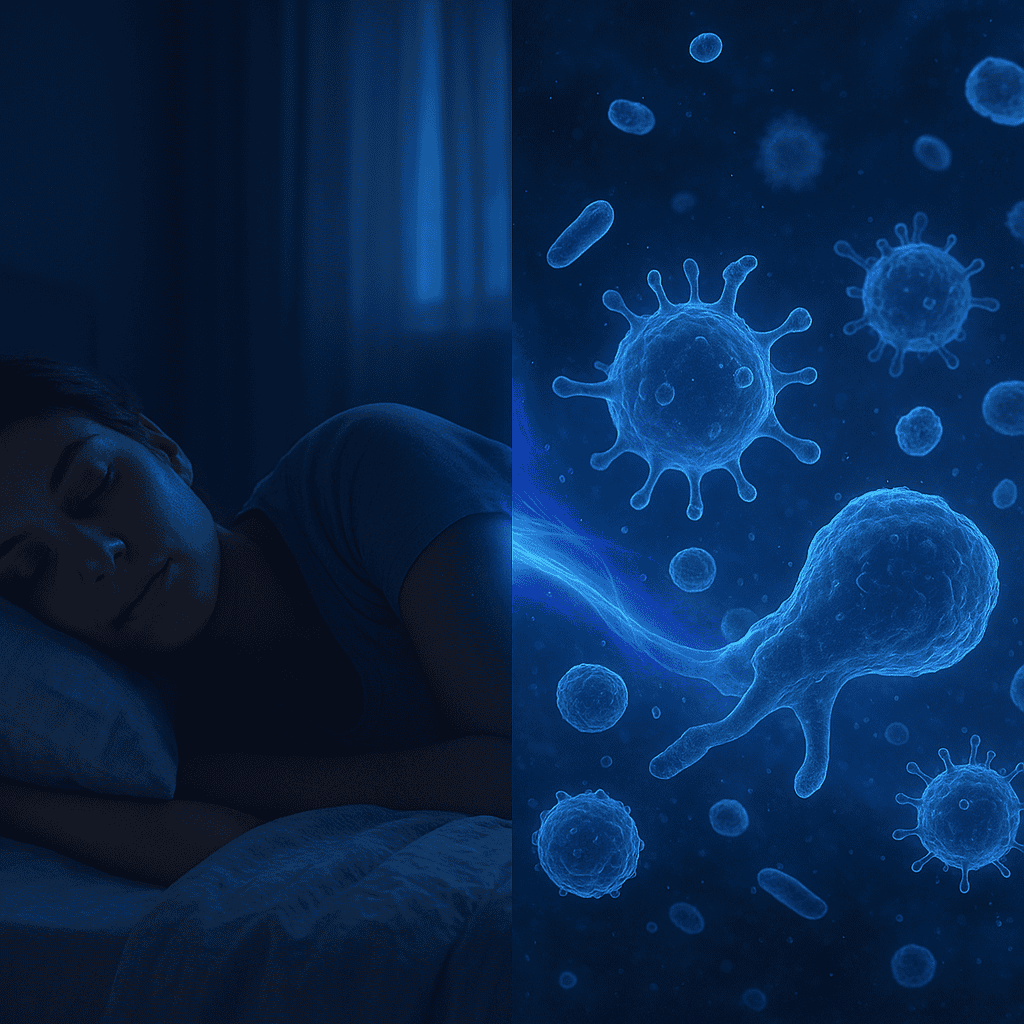
Sleep isn’t a uniform state. Throughout the night, you cycle through distinct stages — light sleep, deep slow-wave sleep, and REM sleep — each triggering different immune activities. During deep sleep, your body ramps up production of cytokines, proteins that act as messengers between immune cells. Some of these cytokines promote inflammation to fight infection, while others regulate the intensity of the response to prevent collateral damage.
Simultaneously, sleep supports the redistribution of immune cells. T cells — the white blood cells that target infected or cancerous cells — move from your bloodstream into lymph nodes and bone marrow, where they receive “updates” about potential threats. This process is heavily dependent on sleep architecture; disrupted or fragmented sleep interrupts these cellular migrations, leaving immune responses poorly coordinated the next day.
Natural killer (NK) cells, your body’s rapid-response force against viruses and tumor cells, also follow a circadian rhythm. Studies show that a single night of poor sleep can reduce NK cell activity by up to 30%. These cells don’t disappear, but their ability to identify and destroy compromised cells becomes sluggish — a temporary vulnerability that becomes significant if sleep loss is chronic.
How Sleep Deprivation Triggers Immune Dysregulation
When sleep is cut short or fragmented, the immune system doesn’t simply become weaker — it becomes erratic. Research consistently shows that sleep loss creates a state of low-grade systemic inflammation, even in otherwise healthy individuals. This isn’t the acute inflammation that helps heal a wound; it’s a persistent, smoldering activation that taxes immune resources without fighting a specific threat.
The Cytokine Storm Connection
One of the most striking findings in recent sleep research involves prolonged sleep deprivation and its effect on inflammatory signaling. Animal studies have demonstrated that extended periods without sleep can induce what researchers describe as a “cytokine-storm-like syndrome” — an uncontrolled release of pro-inflammatory proteins that damages healthy tissue.
In mice subjected to chronic sleep restriction, researchers observed elevated levels of interleukin-6 (IL-6) and tumor necrosis factor-alpha (TNF-α), along with signs of liver and cardiovascular stress. While human responses are typically less extreme, the mechanism is similar: sleep loss tilts the immune balance toward inflammation while simultaneously suppressing the regulatory pathways that keep those responses in check.
Vaccine Response and Antibody Production
The practical implications of this dysregulation extend to preventive medicine. Multiple studies have shown that sleep quality in the days surrounding vaccination directly impacts antibody production. In one landmark study, participants who slept fewer than six hours per night in the week before receiving a hepatitis B vaccine were significantly less likely to achieve adequate antibody levels compared to those sleeping seven hours or more.
Similar effects have been observed with influenza vaccines. Poor sleep appears to interfere with the formation of immunological memory — the process by which your body “remembers” a pathogen to mount faster responses in the future. This means that even if you receive a vaccine, chronic sleep deprivation may leave you less protected than someone with identical vaccination status but better sleep habits.
The Long-Term Immune Consequences of Poor Sleep
While a single restless night creates temporary immune inefficiencies, chronic sleep problems reshape immune function in more fundamental ways. Over months and years, consistently poor sleep quality contributes to:
- Increased infection susceptibility: Chronic short sleepers (less than 6 hours nightly) are roughly four times more likely to develop the common cold when exposed to rhinovirus compared to those sleeping 7+ hours.
- Accelerated biological aging: Poor sleep correlates with shorter telomere length in immune cells, suggesting accelerated cellular aging and reduced immune competence over time.
- Autoimmune risk: Persistent inflammation from sleep loss may trigger or exacerbate autoimmune conditions, where the immune system mistakenly attacks healthy tissue.
- Cancer surveillance impairment: Reduced NK cell activity and disrupted circadian rhythms in immune cells may compromise the body’s ability to detect and eliminate early-stage cancer cells.
The relationship between sleep and immune function also appears bidirectional. Chronic inflammation — whether from obesity, autoimmune disease, or persistent infection — fragments sleep architecture, creating a self-reinforcing cycle where poor immune health disrupts sleep, which further degrades immune regulation.
Can You “Catch Up” on Sleep and Restore Immune Function?
Many people operate on a weekday-deficit-weekend-recovery model, assuming they can repay sleep debt and reset their immune system. The research suggests this strategy is only partially effective. While extended weekend sleep can normalize some markers of inflammation and improve mood, it doesn’t fully reverse the metabolic and immune disruptions caused by chronic weekday sleep restriction.
Studies tracking people who shift from short sleep to extended sleep show that certain immune parameters — particularly those related to glucose metabolism and inflammatory signaling — remain altered even after several nights of recovery sleep. The immune system appears to have a “memory” of sleep debt, with some changes persisting for weeks after sleep patterns normalize.
This doesn’t mean recovery is impossible, but it does suggest that consistency matters more than total weekly hours. Maintaining regular sleep-wake times appears to support immune regulation more effectively than oscillating between deprivation and recovery.
Practical Strategies to Protect Immune Health Through Better Sleep
Given the stakes, optimizing sleep quality becomes a legitimate form of preventive healthcare. Unlike genetic factors or age, sleep is largely modifiable, and improvements here can yield measurable immune benefits within weeks.
Prioritize Sleep Timing and Consistency
Your immune system operates on circadian rhythms, not just total hours. Going to bed and waking at consistent times — even on weekends — helps synchronize immune cell trafficking and cytokine release. Aim for a sleep window that allows for 7-9 hours, with particular emphasis on the hours before midnight, when deep slow-wave sleep dominates and growth hormone release peaks.
Manage Light Exposure Strategically
Light is the primary regulator of your circadian clock. Morning sunlight exposure helps anchor your rhythm and improves nighttime melatonin production, while blue light from screens in the evening suppresses melatonin and delays the immune processes that depend on sleep onset. Consider dimming lights 2-3 hours before bed and avoiding screens or using blue-light filtering tools.
Address Sleep Fragmentation
Even if you spend eight hours in bed, frequent awakenings prevent the deep sleep stages critical for immune regulation. Common disruptors include alcohol (which fragments REM sleep), late meals, and untreated sleep apnea. If you wake feeling unrefreshed despite adequate time in bed, or if a partner notices heavy snoring or breathing pauses, evaluation for sleep-disordered breathing is warranted — untreated apnea creates chronic immune stress through repeated oxygen desaturation.
Time Your Immune Challenges
Emerging research suggests that the timing of immune challenges relative to sleep affects outcomes. When possible, schedule vaccinations for periods when you can prioritize sleep in the following 48 hours. Similarly, during acute illness, allowing for extended sleep — rather than pushing through fatigue — supports the cytokine activity needed for pathogen clearance.
Special Considerations: Shift Work and Chronic Conditions
For the millions working night shifts or irregular schedules, maintaining immune health requires additional strategy. Shift work is classified as a probable carcinogen by the World Health Organization, partly due to its immune-disrupting effects. If you work nights, blackout curtains, consistent sleep scheduling even on days off, and strategic light therapy can help mitigate some immune consequences, though they cannot fully eliminate them.
Similarly, individuals with chronic inflammatory conditions — rheumatoid arthritis, inflammatory bowel disease, or chronic pain — often face a vicious cycle where inflammation disrupts sleep, and poor sleep worsens inflammation. In these cases, treating the underlying condition aggressively and addressing sleep hygiene simultaneously offers the best chance of breaking the cycle.
The Bottom Line
Sleep quality and immune function are inextricably linked through mechanisms we’re only beginning to fully understand. What is clear is that sleep is not a luxury or a passive state, but an active, essential process for maintaining immune competence. Chronic sleep deprivation doesn’t just make you feel run down — it fundamentally alters inflammatory set-points, impairs pathogen defense, and reduces vaccine effectiveness.
The encouraging news is that sleep improvements yield relatively rapid immune benefits. Within weeks of establishing consistent, high-quality sleep, markers of inflammation often decrease, and cellular immune function improves. In the landscape of immune health — where so many factors are outside our control — sleep represents a powerful, accessible lever for long-term health resilience. Prioritizing it isn’t just about feeling rested; it’s about giving your immune system the conditions it needs to protect you effectively for years to come.